
Loading...
Serving Ontario, CA and surrounding areas. (909) 738-1803
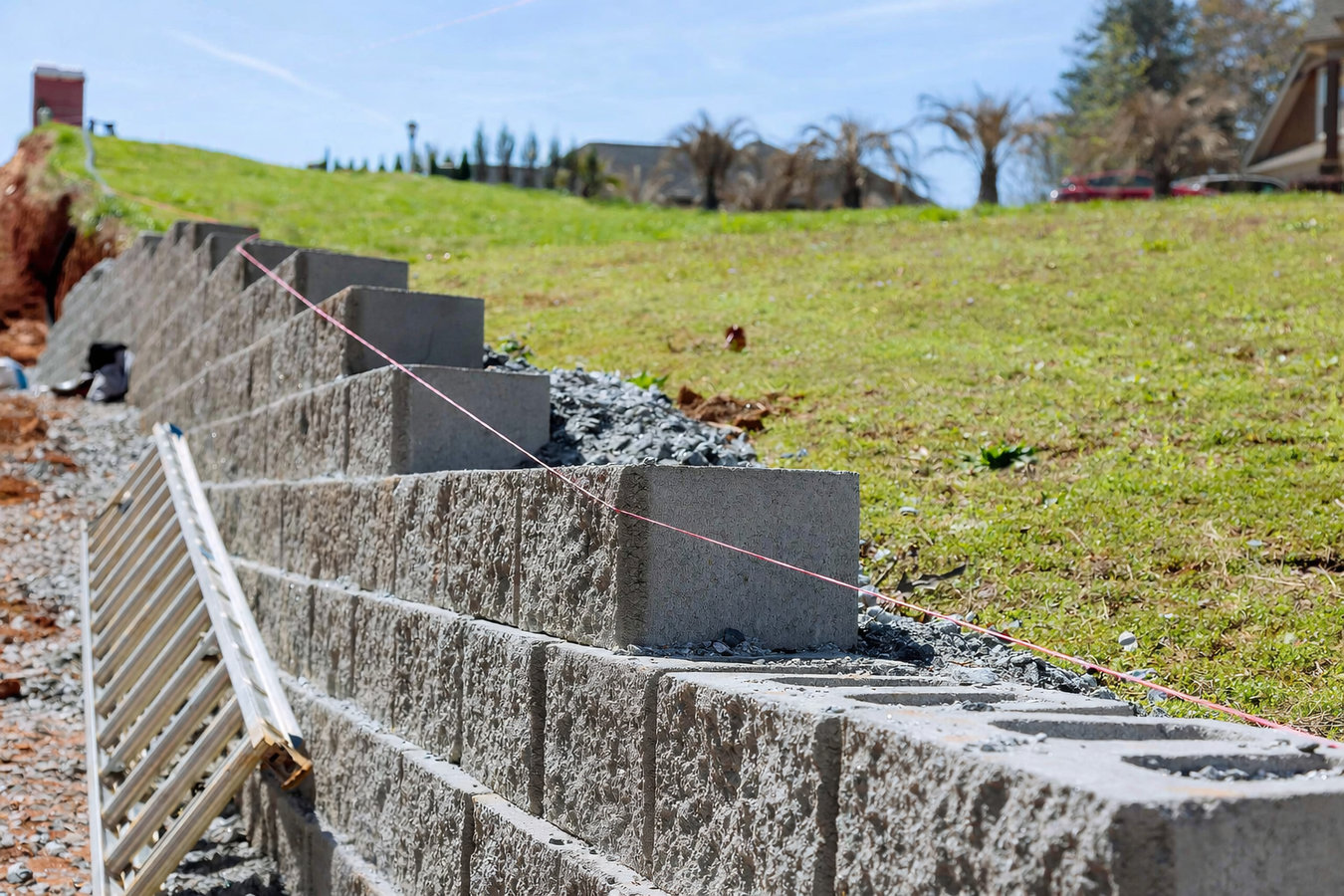
Eroding slopes, shifting soil, and unusable yard space are fixable problems. A properly built retaining wall holds the ground in place, turns a steep hillside into usable flat space, and handles Ontario's clay soil and seismic conditions.
Retaining wall construction in Ontario, CA holds back soil on a slope so it does not slide, erode, or wash onto your yard, driveway, or home - and most residential walls are complete within two to five days once materials are on site and permits are in hand. The Inland Empire's clay-heavy soil is particularly prone to movement: it swells in winter rains and pulls back in dry summer heat, and without a properly built wall to anchor it, that cycle slowly damages everything built nearby.
A well-built retaining wall does more than stop erosion. It turns unusable sloped space into flat terraces you can actually walk, plant, or build a patio on. Many Ontario homeowners also add a wall as part of a larger outdoor project - pairing it with masonry restoration on an existing structure, or using it to create flat ground before adding an outdoor living area. Whatever the reason, the wall is only as good as the drainage installed behind it.
If your yard is already showing signs of soil movement - dirt washing onto your driveway, a fence post starting to lean, or cracks forming in a nearby concrete slab - those are signals the problem is already in progress. The earlier you address it, the less expensive the fix.
If dirt or gravel collects at the base of a slope after Ontario's winter rains, that is active erosion. Left alone it worsens each season, and what starts as a minor cleanup job can eventually undermine a patio, driveway, or foundation. A retaining wall stops that movement at its source.
A wall tilting forward or showing horizontal cracks near the middle is under more stress than it was designed to handle. In Ontario's clay soil, this often happens after a wet winter followed by a hot dry summer. A leaning wall can fail without much warning - this is not a cosmetic issue.
Many Ontario homes, particularly near older neighborhoods or hillside areas, have yards that slope too steeply to use comfortably. A retaining wall creates flat terraces where there was only awkward grade before. If you have been avoiding your backyard because it is too steep to enjoy, a wall changes that.
When soil moves, it takes structures with it. New cracks in a concrete patio or fence posts that have started to tilt are common early warnings that soil movement is underway nearby. In Ontario, where clay soils shift seasonally, catching this early prevents the damage from spreading.
We build retaining walls in concrete block, natural stone, and poured concrete - and the right choice depends on your yard, your budget, and how the finished wall needs to look. Concrete block is the most common for residential work in the Inland Empire: it is durable, cost-effective, and built to handle the seasonal soil movement in this area. Natural stone takes more time and costs more, but it holds just as long and works well where appearance is the priority. Every wall we build includes a drainage layer behind it - gravel backfill and a perforated pipe that lets water escape safely so pressure never builds up and causes the wall to fail. We also connect retaining wall projects with concrete block wall installation for homeowners who want a matching perimeter wall or privacy fence built at the same time.
For walls four feet or taller, we handle the full permit process with the City of Ontario, including any required engineering submissions. We do not start work on a permitted project until everything is approved and on record. The permit is not just a formality - it is what protects you if there is ever a question about the wall's stability, and it keeps your home sale from running into unexpected problems down the road.
The most practical choice for most Inland Empire properties - durable, cost-effective, and designed to hold through seasonal soil movement.
Suited for homeowners where curb appeal or matching existing stonework is the priority - the same structural lifespan as concrete, with more character.
Used on taller walls or sites with heavy soil loads where engineered concrete provides the most reliable structural performance.
Every wall we build includes gravel backfill and drainage pipe behind it - preventing the water pressure buildup that causes most wall failures.
Ontario's soil contains a significant amount of clay that expands when wet and contracts when dry - a cycle that repeats with every wet winter and dry summer. For a retaining wall, this means the foundation depth and drainage design have to account for that movement, or the wall will start to shift within a few years even if it looks solid on day one. The Inland Empire's extended dry season makes the shrinkage particularly pronounced: soil can pull away from structures by measurable amounts each summer, and a wall with a shallow base will follow it. Getting the foundation depth right for local conditions is not optional - it is what determines whether a wall holds for 40 years or starts to lean in 5.
There is also a seismic dimension specific to this region. California's building code requires that walls above a certain height account for lateral forces from ground movement, and Ontario's location in a seismically active area makes that requirement a genuine engineering consideration, not a formality. We work throughout the area, including for homeowners in Upland and Chino Hills, where sloped yards and clay soil conditions are especially common. The UC Agriculture and Natural Resources program publishes practical guidance on slope stabilization for Southern California homeowners who want to understand the underlying factors.
We respond within one business day. A retaining wall project really requires an in-person site visit before we can give you an accurate number - slope, soil, access, and drainage all affect the cost. The visit is free and typically takes 30 to 60 minutes.
After seeing your yard, we put together a written estimate covering labor, materials, drainage, and permit fees. We walk you through material options - concrete block, stone, or poured concrete - and explain the tradeoffs honestly so you can make an informed decision.
Walls four feet or taller require a City of Ontario permit, which we file on your behalf. This may also include an engineering submission. Permit processing typically takes one to three weeks. We keep you updated on where things stand so you are not left guessing.
We dig the foundation trench, build the wall in courses, and install drainage behind it as we go. If a permit was pulled, the city inspector signs off before we close up. Before we leave, you walk the finished wall with us and raise any questions about settling, care, or what to watch for over the first few months.
Free on-site assessment. Written estimate with drainage and permit costs included upfront. We handle the City of Ontario permit process from start to finish.
(909) 738-1803Water pressure behind a retaining wall is the leading cause of early failure - not the material, not the workmanship, but trapped water. We include gravel backfill and a perforated drainage pipe on every wall we build, so pressure never builds up to the point where the wall is fighting a losing battle.
Ontario's clay soil requires deeper foundation depths than the national average would suggest. We have built walls throughout San Bernardino and Los Angeles counties and understand how local soil behavior and seasonal moisture cycles affect what the wall needs to do from the ground up.
When your wall needs a City of Ontario permit - any wall four feet or above - we handle the application, engineering coordination, and city inspection from start to finish. A permitted wall is on record and protects you if there is ever a question about its construction.
Your estimate includes labor, material, drainage, backfill, and permit fees before a shovel touches the ground. The number you agree to is the number you pay. We do not add costs after the job has started.
Every wall we build is designed for where it actually sits - not for an average climate or average soil. Call us or submit a request online and we will get back to you within one business day to schedule your free site visit.
Repair and restore existing masonry structures - walls, columns, and outdoor features - before deterioration spreads.
Learn MoreBuild perimeter walls, privacy fences, or property boundaries using concrete block built to last in Inland Empire conditions.
Learn MoreErosion and soil movement only get worse over time - call today or request a free estimate online and get a written plan before the next rainy season.