
Loading...
Serving Ontario, CA and surrounding areas. (909) 738-1803
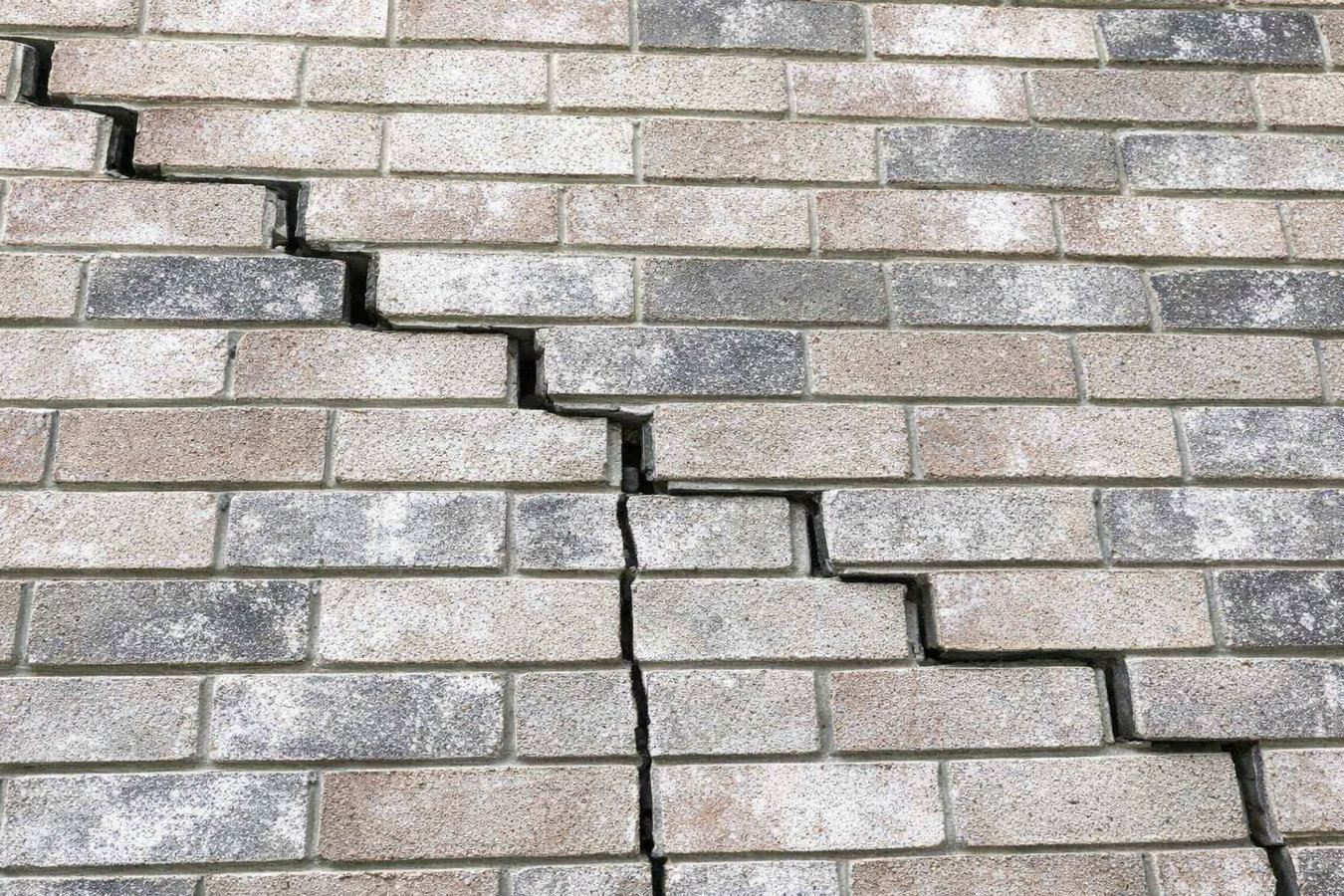
Cracks, settling, and shifting foundations get worse over time. We assess the root cause, pull the required permits, and fix it right - so you are protected now and when you sell.
Foundation repair in Ontario, CA addresses cracks, settling, and shifting in the concrete or masonry that holds your home up, and most residential jobs are completed within one to five days depending on scope. The clay-heavy soil across the Inland Empire swells with winter rain and shrinks in the summer heat - a cycle that puts constant stress on any foundation. Left alone, the problem does not stabilize; it compounds.
If you have noticed diagonal cracks near your door frames, floors that feel off-level, or a door that no longer closes flush, those are signals worth taking seriously. Many homeowners in Ontario also ask us about chimney repair at the same time, since the same soil movement that stresses a foundation can put pressure on masonry above ground as well.
The sooner you contact a masonry contractor, the smaller the repair tends to be. A crack that costs a few hundred dollars to seal today can become a $15,000 stabilization project if the underlying cause keeps working on the structure for another few years.
Hairline cracks in drywall are common, but if you see cracks wider than a pencil tip, running diagonally from door or window corners, or appearing to grow over time, the foundation beneath that area is moving. In Ontario homes built before 1980, these cracks often appear near exterior walls first - right where the foundation is working hardest.
If a door that used to swing freely now drags on the floor or a window no longer opens without force, the frame around it has likely shifted. This is one of the clearest early signs of foundation movement, and it commonly shows up after a wet Ontario winter when the clay soil swells and then begins to dry unevenly.
Walk the perimeter of your home and look at the concrete or masonry at the base. Horizontal cracks are the most urgent - they can mean soil pressure is pushing inward. Stair-step cracks along mortar joints in block foundations are also a warning sign. Even narrow vertical cracks are worth having evaluated if they are growing.
If your floors slope toward one side of a room, or if walking across a certain area feels springy underfoot, the structure below may have settled unevenly. This is especially common in Ontario homes with raised foundations, where the wooden supports in the crawl space can shift or deteriorate over time without any visible sign from above.
Not every foundation problem requires the same fix, and we do not apply a one-size approach. For surface-level cracks that have stabilized, crack filling and sealing stops water from getting in and keeps the damage from spreading. For foundations that are actively moving - settling, shifting, or showing signs of soil-driven instability - we use pier and underpinning methods that anchor the structure to stable ground below the problem layer. We also handle foundation block wall installation for properties that need new or rebuilt perimeter walls to support the structure properly.
Every job starts with a written scope that tells you exactly what we are doing and why. We pull all required permits for structural work in Ontario, and we do not consider a job done until the city inspection is signed off and you have the documentation in hand.
Suited for surface cracks that have stopped moving and need to be waterproofed and stabilized before they allow moisture intrusion.
The right choice when the foundation is actively settling or shifting - piers are driven to stable soil below the problem layer to stop further movement.
Addresses deteriorating mortar joints, spalling concrete, and section failures along the base of the home where water or soil pressure has done damage over time.
Often done alongside foundation repair to fix the water pooling that caused the problem - regrading soil or adding drainage so it does not happen again.
Ontario sits on clay-heavy Inland Empire soil that behaves differently from what you might expect. During the rainy season, the clay absorbs moisture and expands. In the dry summer months - when temperatures regularly top 100 degrees - it dries out and shrinks. That cycle repeats every year, and it puts constant stress on any foundation built on top of it. Homeowners in older parts of Ontario near Euclid Avenue often live in homes built in the 1950s through 1970s on shallow foundations that were never designed with this soil behavior in mind. If your home falls in that category and has never had a foundation assessment, that is worth knowing.
There is also a seismic dimension. Ontario is within range of several active fault systems, and a foundation that is already cracked or settling is more vulnerable during ground movement than a sound one. We work across the full area, including homeowners in Rancho Cucamonga and Fontana who face the same clay soil conditions and seismic exposure. The California Geological Survey maintains detailed soil and fault zone information for homeowners who want to understand what they are dealing with.
We respond within one business day. Tell us what you are seeing - cracks, sticking doors, uneven floors - and we schedule a free on-site assessment at a time that works for you.
A technician walks the perimeter, inspects inside and outside, and checks the crawl space if your home has one. At the end, you get a plain-language explanation of what was found and what is causing it - before anything is proposed.
You receive a written estimate with a clear scope of work, materials, and total cost. For structural work in Ontario, we discuss the permit process up front - we pull the permit, not you, and we explain how it affects the timeline.
The crew completes the repair work - typically one to five days depending on scope. If a permit was pulled, we schedule the city inspection and handle it from start to finish. You receive a copy of the permit sign-off and written warranty documentation.
We offer free on-site assessments and respond within one business day. No pressure, just a clear explanation of what we found.
(909) 738-1803Structural foundation repair in Ontario requires a building permit, and we handle the entire process - from application to city inspection sign-off. You are protected if you sell, and you are not left guessing whether the work was done by the book.
We walk you through exactly what we found and what is causing it before recommending any work. Ontario homeowners on clay soil deserve to understand whether they have a soil problem, a drainage problem, or a structural one - the fix is different for each.
The California Contractors State License Board requires masonry contractors to hold an active state license - you can verify ours at cslb.ca.gov. More importantly, we have worked on Ontario's clay soil long enough to know that a repair without addressing the underlying soil condition rarely holds.
Every foundation repair we complete comes with written warranty documentation, including what is covered and for how long. If something changes after the job is done, you have a contractor who answers the phone - not just a receipt.
Each of these points comes from the same principle: foundation repair is not a commodity service. The soil conditions in Ontario, the age of the housing stock, and the city's permit requirements all shape what a proper repair actually looks like here. We work within that reality, not around it. For more on what separates sound structural work from cutting corners, the California Contractors State License Board is the authoritative starting point for verifying any contractor you hire.
The same soil movement that stresses a foundation can crack chimney mortar and shift the flue - we handle both.
Learn MoreWhen a perimeter wall needs to be rebuilt from the ground up rather than repaired, we design and install block wall foundations to current standards.
Learn MoreFree on-site assessments, permitted structural work, and a written warranty. Get the answers you need before the repair scope - and the cost - gets bigger.